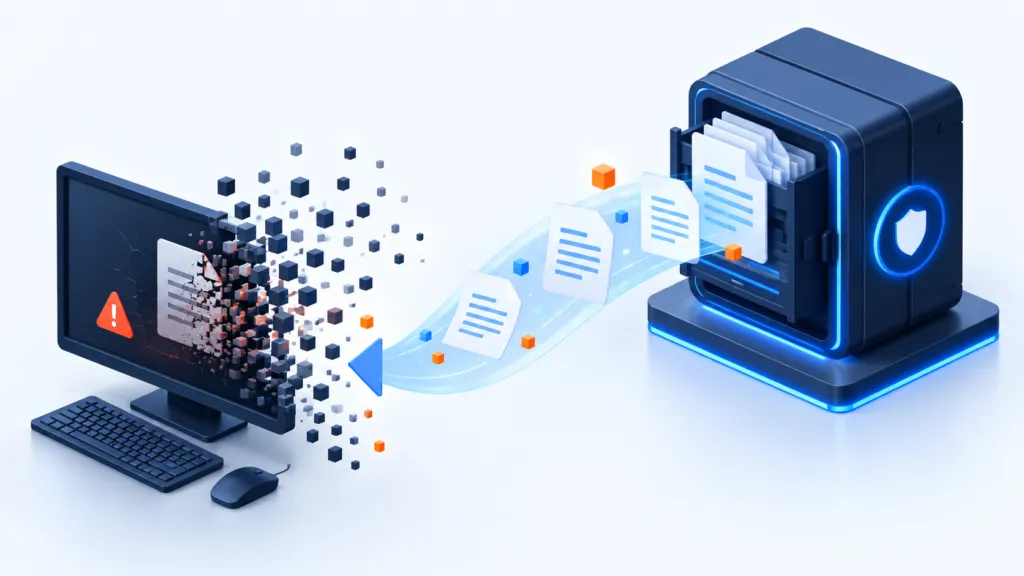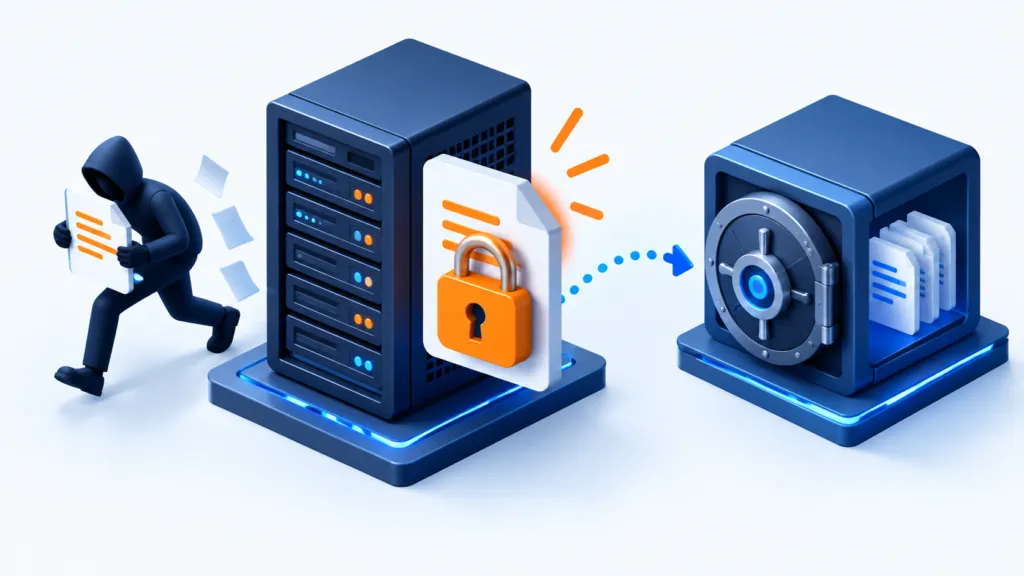
Ransomware is not stopped at an encrypted file and a payment message. In this historical article, written in 2022, we examine how attacks changed during 2021 and early 2022: more impact on infrastructure, more extortion methods, and broader influence on businesses and supply chains. The events and numbers are preserved from the original; they are not up-to-date figures for the year of publication of the article in English.
Ransomware hits in more than one way
- Encryption halts work
- Data theft harms confidentiality
- Backup helps to recover
According to the data cited in the source from Verizon's Data Breach Report, the frequency of ransomware attacks nearly doubled in 2021, accounting for 10% of the breaches examined in the report. The attacks affected organizations of various sizes and industries, including hospitals, schools, governments, and critical infrastructure.
REvil is one of the groups described in the source, and in this context, the vulnerabilities at JBS and Kaseya are mentioned. JBS, one of the largest meat suppliers in the United States, paid $11 million following the incident according to the source. The German chemical distributor Brenntag and the insurance company CNA Financial were also mentioned as examples illustrating the range of victims.
This is a trend that managed service providers need to recognize both for themselves and for their clients. The source notes that in 2021, 37% of organizations reported being impacted by ransomware during the year, and 54% of IT decision-makers believed that ransomware was too advanced for their team to handle alone. Service providers can assist in protection and in building a security strategy that reduces risk over time.
When the attack comes off the screen and affects services
In 2021, significant attacks hit critical infrastructure organizations. One example is Colonial Pipeline, which supplies a substantial portion of fuel to the U.S. East Coast. The attack caused the pipeline to halt operations for several days, disrupted the supply chain, and led to queues at gas stations.
The company paid the attackers $4.4 million. The source notes that the FBI later managed to recover about half of the amount. This is a description of the historical event in the source and not an example from which one can infer that ransom money is usually recovered.
The event was not unique. According to the report cited in the article, ransomware was the main type of attack against industrial organizations in 2021. The manufacturing sector was a prominent target and accounted for 65% of the cases identified in these organizations. The same report attributed half of the attacks to two groups: Conti and LockBit 2.0.
Ransomware as a service: not every attacker writes the code
Ransomware as a Service, or RaaS, is a criminal model in which attackers pay to use ransomware that others have developed. They do not need to write the malware themselves to try to carry out an attack.
The model was not new in 2021, but it continued to make it easier for criminals to carry out attacks even without much expertise. The source cites an estimate of about 56 groups that were offering such products at the time. It presents profitability and the difficulty of dealing with the groups as factors that could encourage the expansion of the trend.
The extortion does not end with encryption
In 2021 there was also an increase in public pressure on victims. Alongside encryption and payment demands, attackers published names and announced who was affected. For the business, the incident was no longer just a conversation with the IT team.
According to one measurement in the source, in 2021 there was an 85% increase in the publication of names and proof of harm compared to 2020, and 35 ransomware groups were added that regularly used extortion methods.
This is how they try to pressure the victim to pay quickly, end the incident, or agree to a higher amount. In some cases, the publication also serves to demonstrate the attackers’ capabilities to other actors in the dark web.
The cost continues even after the ransom demand
As attacks increased, so did the price. The source notes an average ransom demand of $2.2 million in 2021, compared to $900,000 in 2020 and $541,010 in 2019. A ransom demand is not necessarily an amount that was actually paid; not every organization chooses to pay.
A ransom demand can be heavy even for a large organization, but it is only part of the picture. Even if one chooses to pay, decryption and returning data do not necessarily complete the recovery. Activity needs to be restored, systems checked, and it must be ensured that they can be trusted.
It may be necessary to rebuild systems and dedicate additional time to verify that they function properly. According to another source figure, most businesses included in the measurement, 66%, needed about 15 to 30 days to recover.
Even those who protect customers need to protect themselves
An IT provider also needs to protect its own environment. An attack can affect customer support, and the increased connectivity and permissions they have can turn the provider into an attack vector. Responsibility does not stop at the client's firewall.
The incident at Kaseya was an example of this in 2021. The company provides IT management software used by many providers. In July of that year, it announced that it had been affected by a ransomware event, which reportedly spread to about 1,500 organizations worldwide using the software.
REvil demanded 70 million dollars. According to the article, Kaseya refused to pay and obtained a decryption key by other means.
The incident illustrates why service providers need to protect both themselves and their customers. Appropriate security controls and examination of critical software are necessary, including the way their providers develop and maintain them.
What do we take from the events for a protection plan?
These are the changes the author described in 2021. At the time of writing the article, he emphasized that they affect organizations of all sizes and industries, and recommended that service providers monitor them and adapt protection with the customers. The lesson can be carried forward; the numbers should be kept in their historical context.
Providers are sometimes at the forefront of their customers' protection. Password management is an example of a step that can reduce risk and help both the provider and the customer over time.