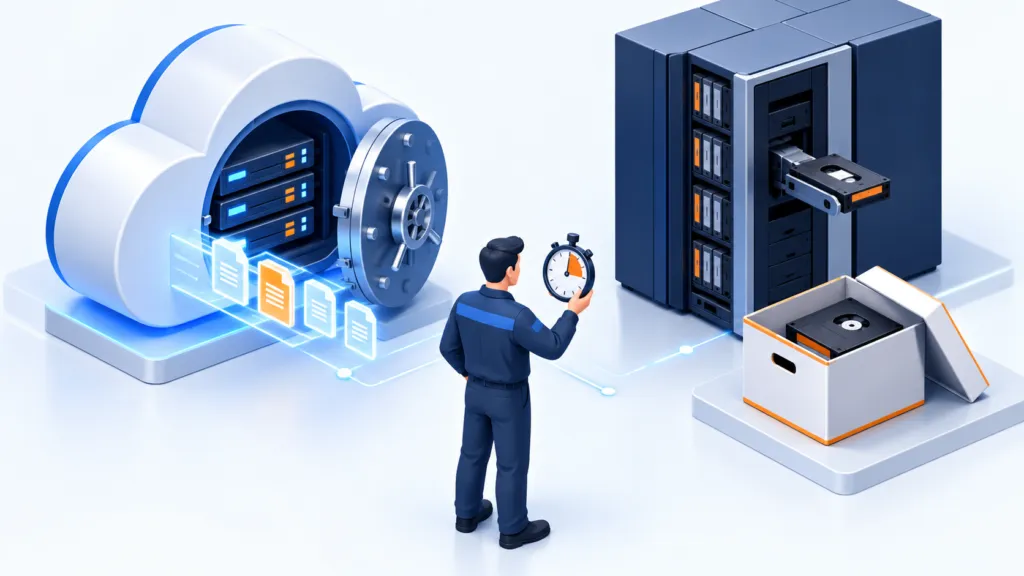
Choosing between cloud backup and tape is not about new versus old technology. Both can form part of a backup environment. Suitability depends mainly on recovery time, retention duration and the ability to operate them over time.
Think about recovery day
- Time to access a copy
- Equipment and bandwidth
- Separation and operations
- Remote access depends on connectivity
- Check transfer, permissions and costs
- Media and equipment to read a copy
- Check cataloging, storage and compatibility
For cloud, check access and recovery speed
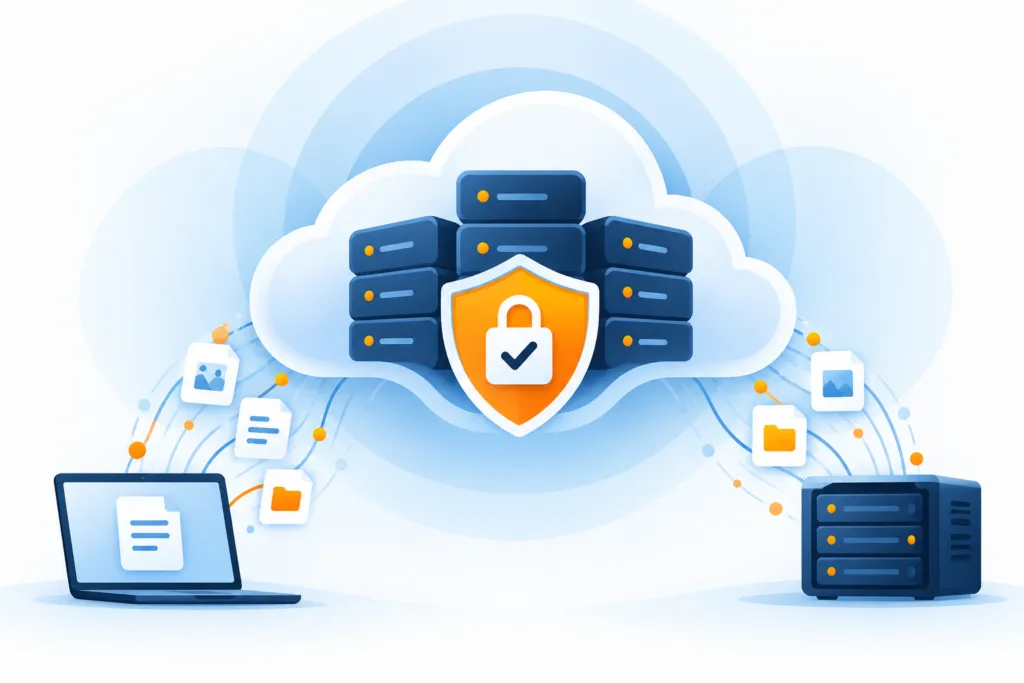
Remote storage can enable backup without changing physical media. Check connectivity, upload and download speeds, permissions and copy protection. Large restores may be bandwidth-limited, and some storage tiers involve preparation times or retrieval costs.
For tape, check the entire workflow
Tape can suit long-term retention and copies removed from the system. A process is needed for cataloging, transport, storage and media testing. Recovery requires locating the tape, obtaining a compatible drive and reading the data. Stored media is of no use if the equipment or catalog is missing.
Separation does not happen automatically
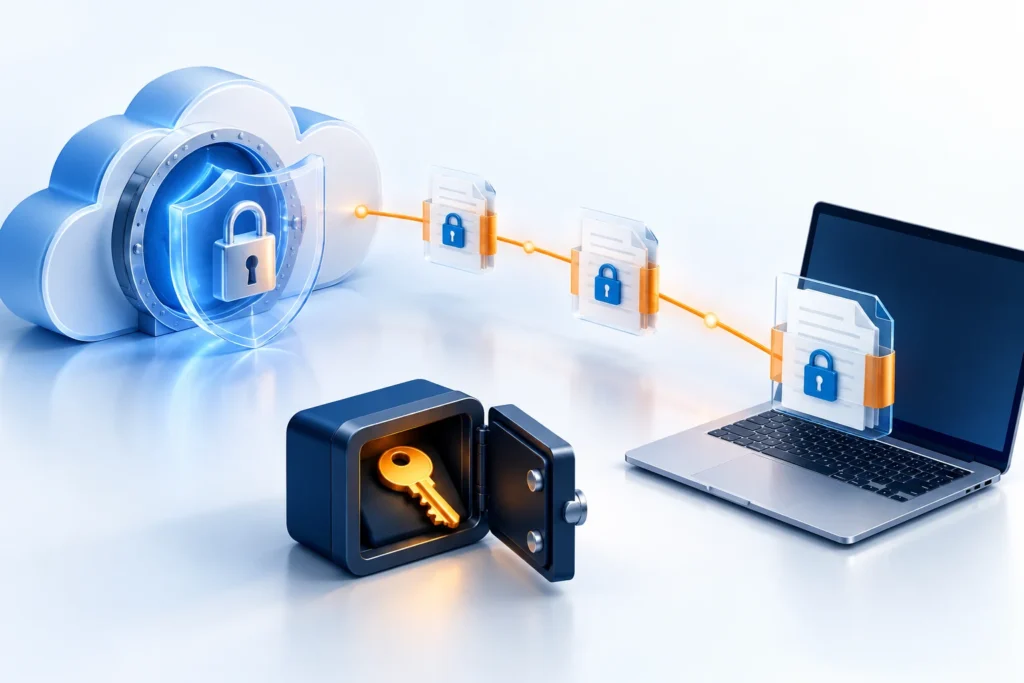
A tape inside a connected library is not the same as one removed and stored separately. A cloud destination is not protected simply because it is remote: a broadly privileged account may reach it. Evaluate disconnection, modification and deletion protection and key management according to risk.
Compare total costs
Include storage, traffic, equipment, media, operations, transport and testing. A capacity-only calculation may overlook the work required on recovery day.
Combine them as needed
- Copies available for routine, fast recovery.
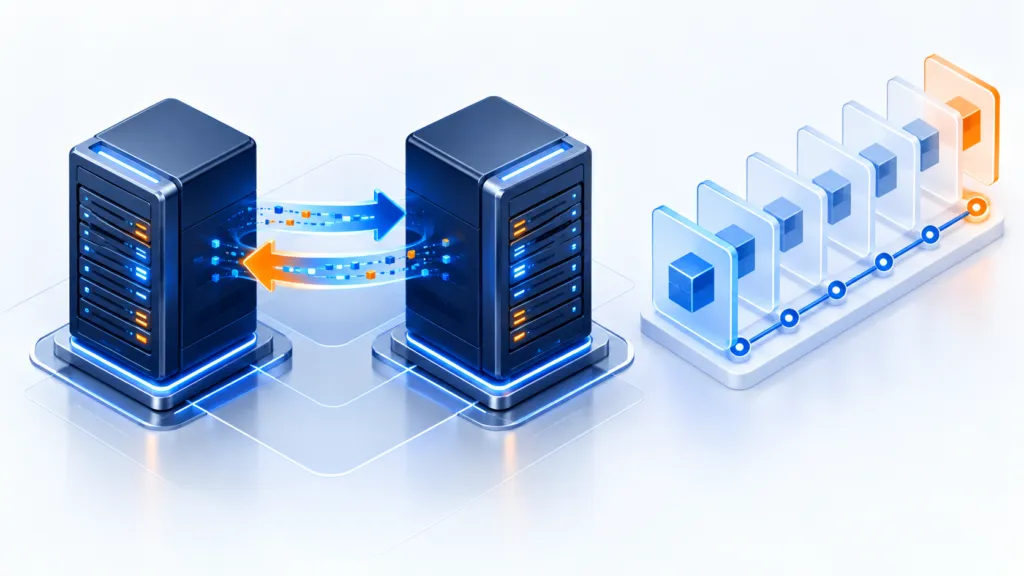
- Separate copies for long-term retention or a widespread incident.
- Read and recovery tests for every layer.
Choose according to business objectives and available resources, and document responsibility for every part of the process.