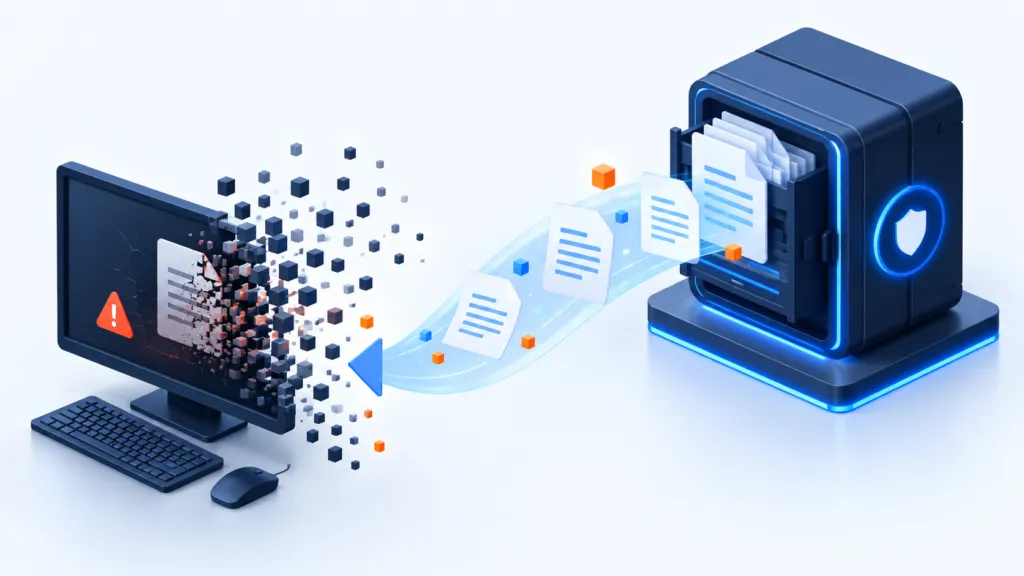
Ransomware attacks are among the most urgent threats to businesses. The best way to deal with them is to invest in prevention, but there is no way to guarantee absolutely that the data will never be encrypted or held for ransom.
Therefore, it is essential to prepare a response plan in advance. The plan helps both internal IT teams and managed service providers respond quickly, calmly, and efficiently during an incident.
Ransomware? Don’t improvise in real time.
- Define responsibilities in advance
- Isolate the incident
- Recover according to priority
Why create a ransomware response plan?
A structured plan increases the chance of recovering without paying the ransom. When there is no plan and recovery is expected to take a long time, the business might decide to pay just to resume operations — even if the data could have been recovered in another way. Beyond the financial cost, such an outcome undermines trust in the IT team.
Shutting down data and systems can cause heavy losses every minute. A response plan shortens decision-making time and recovery time, thereby reducing the financial damage.
The plan also requires investigating the source of the breach and addressing it, thereby reducing the risk of the attack recurring. In addition, rapid recovery helps protect reputation and prevents critical customer service disruption.
Who needs a response plan?
Ransomware affects organizations of all types, sizes, and industries. A small business with a few employees requires preparation no less than a large organization. The plan is important for internal IT teams and MSP providers managing client systems externally.
Template for a ransomware incident response plan
Every plan should be tailored to the types of information at risk, the backup tools, the recovery processes, and the available resources. However, a typical plan includes eight key steps:
Defining the scope of the attack
Check how much information was affected and how many systems were breached. Is the incident limited to a server, workstation, or a single database—or was the entire cloud environment and data center impacted?
Isolating the affected systems
After identification, shut down the systems or disconnect them from the network to stop the spread. Act in a controlled manner: predefine what is disconnected first, who is authorized to do it, and how to preserve the integrity of evidence and information.
Assessing the damage
Once the attack has stopped, examine what was encrypted, which backups are available, and how up-to-date they are. Ensure that there is also a practical recovery plan for the backups found.
The first three steps
First, stop the spread.
Only then start the recovery.
Reporting the attack
Regulation or contracts may require reporting. If there is a reporting obligation, follow the relevant framework and notify the authorities, customers, or data subjects as required. It is recommended to obtain appropriate legal and regulatory advice.
Preparing a recovery plan
Determine which systems and data repositories will be restored, from which copy, and in what order. If up-to-date backups and ready recovery plans exist, they can be executed. Otherwise, build a complete plan before starting work to prevent mistakes and omissions.
Data recovery
Execute the plan according to the types of backup. First, restore to a clean and isolated environment, verify that the data is intact, and only then return services to production.
Safe recovery =
- Clean and verified copy
- Isolated environment for testing
- Business priority order
- Approval before returning to production
Conducting a security audit
After the systems have returned to operation, check how the attacker entered: phishing, malware, vulnerability, excess permissions, internal agent, or another path. Addressing the root cause of the incident is essential to prevent recurrence.
Writing an Event Report
Document the timeline, the systems and information that were affected, the actions taken, the recovery results, and the lessons learned. Add corrective and preventive measures, assigned owner, and target date for each task.
Short checklist
- Has the threat been stopped?
- Is the backup clean?
- Is the target isolated?
- Has the result been verified?
- Has everything been documented?
The life cycle of the response plan
The work does not end with writing the document. To ensure the plan works in real-time, it must be continuously maintained:
- Define a response team: Determine who is responsible for each step, who makes decisions, and who communicates with clients and management.
- Test the plan: Conduct a dry run to identify gaps, missing permissions, and unexpected issues.
- Repeat the test: Schedule periodic exercises, since systems, people, and threats change.
- Update the plan: Perform an update after a technological change, adding a cloud service, replacing servers, or changing work policies.
The plan is a living document
And repeat the cycle regularly…
Summary
Ransomware can harm any business, and even a thorough security strategy cannot guarantee full immunity. To protect operations, it is important to prepare a response plan, test it, and update it regularly. A clear and practiced plan allows for rapid response, minimizing damage, and safely restoring systems.